

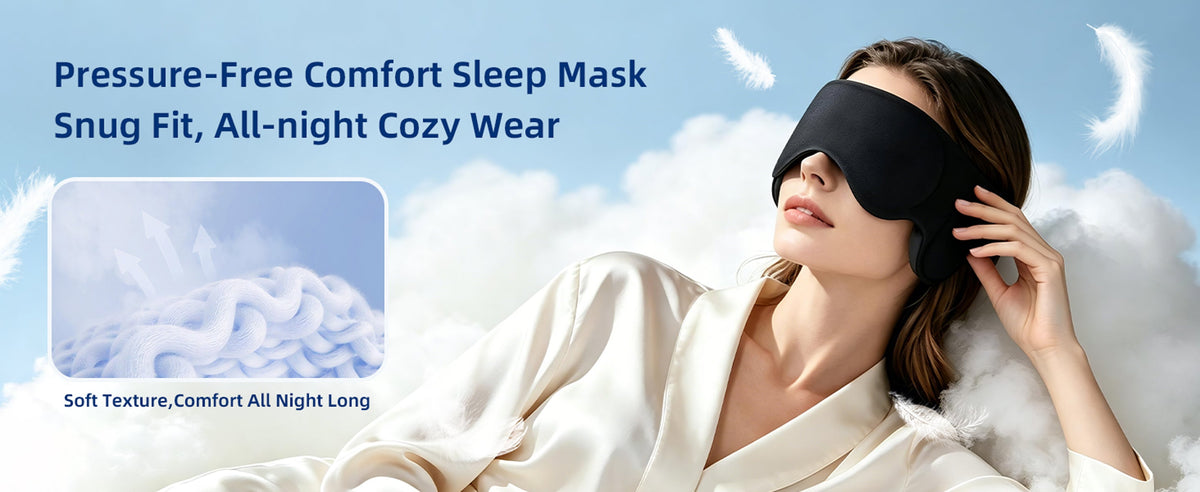
Night Sweats & Hot Flashes: Why Cooling 3D Breathable Sleep Masks Beat Hot Silk
Waking up at 2:00 AM drenched in sweat, with your heart racing and your facial skin radiating intense heat, is an exhausting reality for millions.
Whether triggered by perimenopause, menopause, hormonal shifts, medications, or high metabolic rates, nocturnal vasomotor symptoms (hot flashes and night sweats) directly interrupt your body's natural circadian cooling cycle.
To cope, many hot sleepers turn to silk sleep masks, drawn to the initial cool feeling of natural fabric. However, within 20 minutes of sleep onset, silk masks often backfire—trapping heat against your face, absorbing sweat, and sticking uncomfortably to your eyelids.
In this 2026 Thermal Sleep Guide, we explore the physiology of nocturnal heat surges, evaluate why traditional silk fails hot sleepers, and explain how engineered open-cell 3D breathable eye masks deliver lasting temperature regulation alongside 100% blackout recovery.
1. The Biology of Nocturnal Hot Flashes & Facial Vasodilation
To initiate and sustain deep Slow-Wave Sleep (SWS), your body’s core internal temperature must drop by approximately 1°C to 1.5°C (2°F).
During a nocturnal hot flash, a sudden hormonal shift in the hypothalamus (the brain’s internal thermostat) misinterprets normal body temperature as dangerously elevated.
                  THE NOCTURNAL HOT FLASH SURGE MECHANISM

   [ Hypothalamic Vasomotor Surge ]
                 │
                 ▼
   ┌──────────────────────────────────────────────┐
   │ Rapid Cutaneous Vasodilation                 │ ──► Blood rushes to facial capillaries
   └──────────────────────────────────────────────┘
                 │
                 ▼
   ┌──────────────────────────────────────────────┐
   │ Sudden Facial Heat Spike & Perspiration      │ ──► Brow and periorbital zone sweat
   └──────────────────────────────────────────────┘
                 │
                 ▼
   ┌──────────────────────────────────────────────┐
   │ Fabric Traps Radiant Heat & Moisture         │ ──► Mask turns into a warm, damp compress
   └──────────────────────────────────────────────┘
                 │
                 ▼
   [ Adrenaline/Cortisol Spike ──► Abrupt Middle-of-the-Night Awakening ]
-
Periorbital Capillary Dilation: The face, forehead, and neck experience an immediate rush of blood to dissipate heat.
-
Moisture Condensation: Sweat glands around the brow and temples activate rapidly.
-
The Microclimate Trap: If your sleep mask cannot vent this sudden burst of heat and moisture, the skin temperature under the mask rises, triggering an adrenaline spike that pulls you completely out of sleep.
 2. The Silk Myth: Why Pure Silk Fails During Hot Flashes
Silk is frequently promoted as the gold standard of luxury sleep. While mulberry silk feels cool for the first 60 seconds of contact, its physical properties present distinct challenges for hot sleepers:
+----------------------------------------------------------------------------------------------------+
|                                    SILK FABRIC VS. 3D OPEN-CELL CONTOUR                            |
+------------------------------+---------------------------------------+-----------------------------+
| THERMAL & HYGIENIC CRITERIA  | TRADITIONAL 100% SILK SLEEP MASK      | FISMOOL 3D BREATHABLE MASK  |
+------------------------------+---------------------------------------+-----------------------------+
| Initial Contact Sensation    | Instantly cool (for ~2 minutes)       | Ambient neutral & soft      |
| Heat Dissipation Over 8 Hrs  | Poor (Dense fiber traps facial heat)  | High (Open-cell airflow)    |
| Sweat & Moisture Handling    | Absorbs & clings damp to eyelids      | Micro-wicking, stays dry    |
| Eyelid & Corneal Contact     | Full contact (Warms eyelids directly) | Suspended in 3D air dome    |
| Bacterial & Odor Resistance  | Silk proteins harbor sweat bacteria   | Hypoallergenic & washable   |
| 100% Daylight Blackout Seal  | Shifts when damp; leaks at nose       | Molded 3D zero-gap baffle   |
+------------------------------+---------------------------------------+-----------------------------+
The 3 Core Limitations of Silk for Night Sweats:
-
Dense Protein Insulation: Silk is a natural insulator designed by silkworms to keep pupae warm. Its tightly woven filaments trap radiant body heat once skin contact warms the surface.
-
Moisture Cling & Stickiness: Silk absorbs up to 30% of its weight in moisture without feeling dry. When a night sweat occurs, the wet fabric flattens against your eyelids, causing sticking and discomfort.
-
Zero Eyelid Ventilation: Because silk sits flat against the eyelids, zero ambient air can circulate around the eye sockets, keeping the ocular microclimate warm and humid.
3. How Cooling 3D Breathable Masks Maintain Thermal Balance
A modern cooling sleep mask relies on active air permeability and structural air suspension:
+------------------------------------------------------------------------------------------------+
|                                3D THERMAL REGULATION PILLARS                                   |
+--------------------------+-----------------------------------+---------------------------------+
| DESIGN COMPONENT         | THERMODYNAMIC MECHANISM           | HOT-SLEEPER BENEFIT             |
+--------------------------+-----------------------------------+---------------------------------+
| 1. Elevated 3D Air Domes | Creates an insulating air chamber | Eye tissue never touches fabric |
| 2. Open-Cell Foam Matrix | Micro-perforations vent hot air   | Continuous convective cooling   |
| 3. Moisture-Wicking Mesh | Channels perspiration outward     | Stays dry during sweat surges   |
| 4. Ultra-Slim Side Wings | Minimal skin surface coverage     | Prevents temple heat trapping   |
+--------------------------+-----------------------------------+---------------------------------+
1. The Suspended Air Cushion
By arching over the eye sockets, 3D contoured masks create an elevated chamber. The heat radiating from your corneas and eyelids disperses into the hollow air space rather than transferring into dense, damp cloth.
2. Convective Open-Cell Foam Ventilation
Unlike solid foam or layered cotton padding, open-cell memory foam features an interconnected cellular matrix that allows air to pass freely through the interior of the mask, venting warm air outward away from your face.
3. Reduced Facial Footprint
High-performance 3D masks feature tapered wings that minimize the total surface area of fabric covering your cheeks and temples, maximizing exposed skin for natural evaporative cooling.
 4. The 4-Step Bedtime Routine for Night Sweats & Hot Sleepers
To maintain a stable thermal environment and prevent sleep-disrupting hot flashes, follow this nightly routine:
                   THE HOT SLEEPER'S NIGHTTIME COOLING TIMELINE

  [ T - 60 Min ] ────────► [ T - 30 Min ] ────────► [ Bedtime Setup ] ────────► [ Mid-Night Surge ]
   Lower AC to 65°F         Take a lukewarm shower   Don breathable 3D mask    Mask vents facial heat
   Set moisture fan         Promotes vascular drop   0-Lux total blackout      Wake dry and rested
-
Optimize Ambient Room Climate: Set your bedroom thermostat between 60°F and 67°F (15°C to 19°C). Use breathable cotton, bamboo, or linen bedding.
-
The Pre-Bed Vascular Flush: Take a warm (not cold) shower 30 minutes before bed. This stimulates peripheral blood flow to your hands and feet, rapidly dropping your core body temperature.
-
Avoid Alcohol & Late Spicy Meals: Alcohol and spicy foods stimulate vasodilation, increasing the frequency and intensity of middle-of-the-night hot flashes.
-
Deploy a Ventilated 3D Mask: Put on a breathable, contoured 3D mask like Fismool to block morning dawn photons while allowing continuous periorbital heat dissipation.
The Fismool Breathable Standard: Engineered for Hot Sleepers
At Fismool, we designed our 3D Ergonomic Breathable Sleep Mask Collection specifically to address nocturnal temperature fluctuations:
-
Micro-Ventilated Open-Cell Foam: Allows facial heat and perspiration to pass through the foam layer, keeping your eye area comfortably dry.
-
Elevated 360-Degree Eye Cavities: Keeps all fabric elevated above your eyelids, preventing sticky fabric cling during sudden hot flash episodes.
-
Silky-Smooth Moisture-Wicking Lining: OEKO-TEX certified lining fabric wicks away brow sweat while feeling featherlight against sensitive skin.
-
100% Light Blackout with Zero Bulk: Precision nasal contour seals out light without requiring thick, heat-trapping padding around the nose.
 Frequently Asked Questions
Q1: Is silk or memory foam better for hot flashes and night sweats?
For hot flashes, a breathable 3D memory foam mask with open-cell ventilation is superior to silk. While silk feels cold initially, it traps radiant body heat and absorbs sweat, sticking to the eyelids. An open-cell 3D mask suspends fabric off the eyes and allows continuous air circulation to keep skin cool and dry.
Q2: Why do sleep masks make me feel hotter at night?
Traditional flat sleep masks cover a large surface area of the face and use dense, non-breathable fabrics that trap body heat and sweat. Switching to an ultra-tapered 3D mask with hollow eye cavities reduces skin contact and permits natural convective cooling.
Q3: How do you clean a sleep mask after night sweats?
Hand-wash your 3D sleep mask in cool water using a gentle, fragrance-free cleanser every 3 to 5 days to remove accumulated oils and sweat salts. Press flat inside a dry towel to remove water, then air-dry flat in a shaded, well-ventilated space.
Stay Cool, Dry, and Fully Rested
Stop letting nocturnal hot flashes and damp sleep masks disrupt your sleep. Discover the Fismool 3D Ergonomic Breathable Collection and experience the cooling comfort of zero-pressure 100% blackout sleep engineered for temperature-sensitive rest.


