

Best Sleep Mask for Dry Eyes (2026 Guide)
Waking up with dry, itchy, or burning eyes is more common than many people realize. While lubricating eye drops can provide temporary relief, they don't always address what happens while you're asleep.
At Fismool, we've spent countless hours researching sleep comfort and the factors that contribute to overnight eye dryness. Through customer feedback and ongoing product development, we've learned that many people experience their worst dry eye symptoms not during the day—but first thing in the morning.
That's because your eyes continue to lose moisture throughout the night, especially if you're exposed to dry air, sleep with your eyelids partially open, or have conditions such as Meibomian Gland Dysfunction (MGD).
Choosing the right sleep mask can help create a more comfortable sleeping environment by blocking light and reducing exposure to dry airflow, allowing your eyes to stay better protected overnight.
In this guide, we'll explain what causes dry eyes while sleeping, how sleep masks may help, and what features to look for when choosing the best sleep mask for your needs.
Waking up with dry, itchy, or burning eyes is more common than many people realize. For some, it's an occasional inconvenience after sleeping in an air-conditioned room. For others, especially those living with Dry Eye Syndrome or Meibomian Gland Dysfunction (MGD), morning discomfort becomes part of everyday life.
Many people rely on lubricating eye drops during the day, but they often overlook an important question:

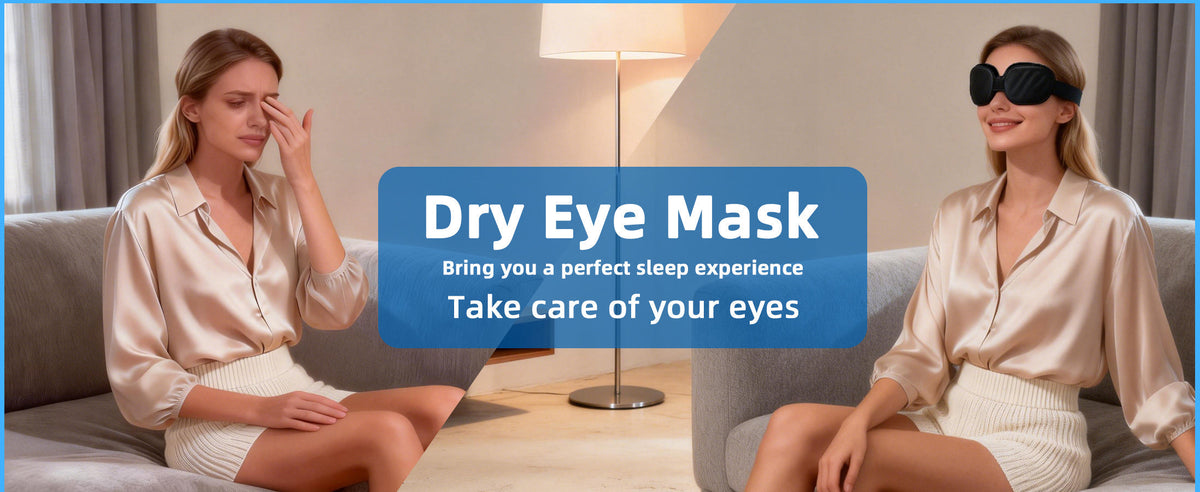
Why Fismool Designed a Sleep Mask for Dry Eye Comfort
Not all sleep masks are created with eye comfort in mind.
Many traditional sleep masks focus only on blocking light. While darkness can improve sleep quality, people with dry eyes often need more than complete blackout. Comfort, breathability, and a gentle fit around the eye area are equally important.
The Fismool Dry Eye Sleep Mask was designed with these needs in mind.
Instead of pressing firmly against the eyelids, it features a contoured shape that helps reduce pressure around the eyes while maintaining a comfortable fit throughout the night. The soft, skin-friendly materials are selected to provide long-lasting comfort, whether you're sleeping at home or while traveling.
For side sleepers, the lightweight construction helps minimize discomfort caused by pressure against the pillow. The adjustable strap allows users to personalize the fit without feeling overly tight.
While a sleep mask is not a medical treatment for Dry Eye Disease, many users find that creating a darker, more comfortable sleeping environment can become a helpful part of their nighttime routine.
If you're looking for a sleep mask that combines total blackout with all-night comfort, the Fismool Dry Eye Sleep Mask is designed to support better sleep and a more comfortable morning experience.

What happens to your eyes while you're sleeping?
During sleep, your eyes continue to lose moisture. If your eyelids don't close completely or the surrounding air is dry, tears evaporate throughout the night. By morning, your eyes may feel irritated, gritty, or sensitive to light before your day even begins.
Fortunately, choosing the right sleep mask can help create a better overnight environment for your eyes.
Unlike ordinary eye masks designed only to block light, sleep masks made for dry eyes focus on reducing tear evaporation while remaining comfortable enough to wear throughout the night.
In this guide, we'll explain:
- Why dry eyes often feel worse in the morning
- Whether sleep masks actually help
- The features that matter most
- How to choose the best sleep mask for your needs
- Practical tips for improving overnight eye comfort
Whether you've recently noticed morning dryness or you've struggled with chronic dry eyes for years, understanding what happens overnight is the first step toward finding lasting relief.
Why Do Eyes Become Dry While Sleeping?
Many people assume dry eyes only occur when they're staring at a computer screen or spending time outdoors. In reality, nighttime can be one of the biggest contributors to dry eye symptoms.
Healthy eyes are protected by a thin tear film made up of three layers:
- An oily outer layer that slows evaporation
- A watery middle layer that provides hydration
- A mucus layer that helps tears spread evenly across the eye
These layers work together throughout the day to keep your eyes smooth, comfortable, and protected.
At night, however, several factors can interfere with this natural balance.
1. Tear Evaporation Continues Overnight
Even when you're asleep, your tears gradually evaporate.
Normally, closed eyelids help slow this process. However, if your sleeping environment is dry or air is constantly moving across your face from a fan or air conditioner, moisture loss can increase significantly.
This is one reason why many people notice their symptoms are worse after sleeping in hotel rooms, airplanes, or heavily air-conditioned bedrooms.
2. Incomplete Eyelid Closure
Some people sleep with their eyelids slightly open, a condition known as nocturnal lagophthalmos.
Even a small opening allows tears to evaporate continuously throughout the night.
Many people don't realize they sleep this way until an eye doctor notices signs of overnight exposure or a partner points it out.
Common signs include:
- Burning eyes immediately after waking
- One eye feeling worse than the other
- Morning redness
- Blurred vision that improves later in the day
3. Meibomian Gland Dysfunction (MGD)
Your meibomian glands produce the oil layer of your tears.
When these glands become blocked or don't function properly, tears evaporate much more quickly.
MGD is one of the most common causes of evaporative dry eye and often leads to symptoms such as:
- Gritty sensation
- Burning eyes
- Fluctuating vision
- Dryness throughout the day
- Increased discomfort after sleeping
For people with MGD, protecting the eyes overnight can be an important part of an overall eye care routine.
4. Dry Sleeping Environments
Modern homes often have lower indoor humidity than people realize.
Common contributors include:
- Air conditioning
- Central heating
- Ceiling fans
- Portable fans
- Low winter humidity
These conditions increase evaporation while you sleep, leaving your eyes feeling significantly drier by morning.
5. Aging and Hormonal Changes
As we age, natural tear production often decreases.
Hormonal changes—particularly during menopause—can also affect tear quality and oil production, making overnight dryness more noticeable.
Because these changes happen gradually, many adults first notice symptoms after waking rather than during the day.
Why Morning Symptoms Matter
Many people simply reach for eye drops every morning without considering why their symptoms keep returning.
Morning dryness is often a sign that your eyes aren't staying adequately protected overnight.
While eye drops can temporarily replace lost moisture, they don't address the environment your eyes experience during six to eight hours of sleep.
Improving overnight conditions—by reducing airflow, maintaining humidity, and using a well-designed sleep mask—may help reduce tear evaporation and make mornings more comfortable.
In the next section, we'll explore whether sleep masks actually help dry eyes, how they work, and which features make the biggest difference.
If you're looking for a comfortable sleep mask that combines complete blackout with a soft, eye-friendly design, explore the Fismool Dry Eye Sleep Mask and discover how a better nighttime routine can support healthier, more refreshing mornings.


