

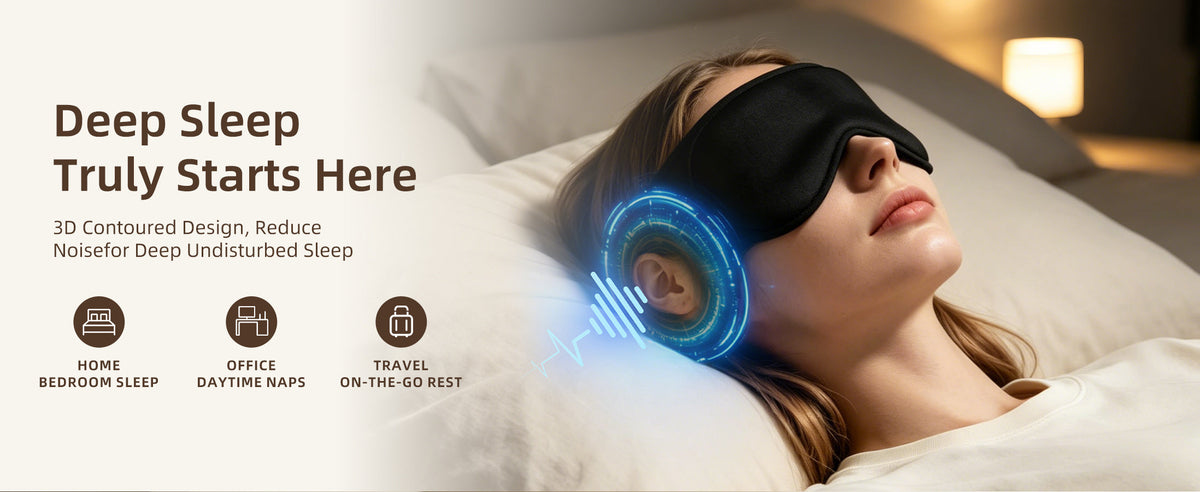
For light sleepers and noise-sensitive individuals, bedtime can quickly feel like an overwhelming sensory gauntlet.
Between erratic street noise, barking neighborhood dogs, refrigerator hums, and ambient hallway light, entering deep slow-wave rest requires serious defense. The conventional solution has always been the same: jam expanding foam earplugs into your ear canals and strap on a standard elastic eye mask.
Yet millions wake up at 2:00 a.m. with aching ear cartilage, an uncomfortable stuffed sensation, or the disquieting sound of their own heartbeat thumping inside their ears.
There is a vastly superior, non-invasive alternative gaining momentum: integrated wrap-around eye-and-ear sleep covers.
Here is the acoustic and ergonomic science behind why shielding your ears from the outside—rather than plugging them from the inside—is the ultimate breakthrough for noise-sensitive side sleepers.
 1. The Physiological Cost of Nightly Earplug Use
While disposable foam earplugs attenuate high-frequency noise, using them nightly presents genuine biological drawbacks:
-
The Occlusion Effect: Sealing the external auditory canal amplifies bone-conducted vibrations. Sufferers frequently hear a rhythmic thudding of their own pulse and breathing, which actively prevents the brain from shifting into parasympathetic relaxation.
-
Microbial & Moisture Trapping: Sealing the canal for 7 to 8 hours creates a warm, humid environment that encourages bacterial and fungal growth, raising the risk of outer ear canal inflammation (Otitis externa).
-
Pillow Impact on Side Sleepers: When you roll onto your side, the pillow drives the rigid stem or dense foam plug deeper into the canal wall, leading to bruised cartilage and morning ear tenderness.
2. How Integrated Eye-and-Ear Covers Provide External Sound Dampening
An integrated eye-and-ear sleep cover acts as an acoustic buffer rather than a physical plug.
Instead of inserting foreign materials into the ear canal, high-grade wrap-around covers use multi-layer acoustic dispersion:
-
Passive Sound-Dampening Core: Multiple micro-layers of slow-rebound memory foam and sound-absorbing textiles rest softly over the auricle (outer ear), absorbing and breaking up disruptive sound waves (like distant voices, hallway footsteps, or traffic drone).
-
Proprioceptive Calming Pressure: The broad, seamless wrap applies gentle, uniform contact around the circumference of the head—similar to a mini weighted blanket for your skull—calming an overactive sensory system.
 3. The Power of Dual-Sensory Deprivation for High Sensitivity
For individuals with sensory processing sensitivities, ADHD, or light-induced insomnia, isolating only vision or only hearing is rarely effective:
-
A tiny light leak across the bridge of the nose alerts the retinas and spikes cortisol.
-
A sudden floorboard creak breaks fragile non-REM Stage 2 sleep.
By uniting deep 3D contoured eye chambers with padded wrap-around ear wings, an integrated cover creates a cohesive sensory retreat. The 3D molded pockets provide absolute clearance so your eyes can blink freely and eyelashes remain untouched, while the extended side flaps drape over your ears to buffer acoustic disturbances.
4. Comparison: Traditional Earplugs vs. Wrap-Around Eye-and-Ear Cover
| Performance Feature | Foam Earplugs + Basic Eye Mask | Heavy Over-Ear Earmuffs | Fismool Ergonomic Eye & Ear Sleep Cover |
| Ear Canal Health | ❌ Compresses wax, traps sweat | ✅ Non-invasive | ✅ 100% Non-invasive; zero ear canal contact |
| Internal Pulse Thumping | ❌ Severe occlusion effect | ⚠️ Moderate | ✅ None; natural acoustic diffusion |
| Side Sleeping Comfort | ⚠️ Can drive plug painfully deep | ❌ Rigid plastic; impossible on side | ✅ Seamless, cushioned flat ear wings |
| Light Blockout | Often leaks at nose bridge | None (requires extra mask) | ✅ 100% Contoured zero-gap 3D blackout |
| Electronics & Charging | None | None | ✅ 100% Battery-free, zero-EMF peace of mind |
| Sensory Soothing | Localized canal tension | Heavy & restrictive | ✅ Uniform, gentle wrap-around calming fit |
 5. Frequently Asked Questions
Q1: Can an ear-covering sleep mask block as much noise as silicone or foam earplugs?
Foam earplugs provide higher decibel reduction inside the canal, but they introduce physical pain and internal echoes. An external eye-and-ear sleep cover acts as a comfortable sound-dampening acoustic buffer, muting sharp clatter, voices, and household sounds to a gentle background murmur without touching your ear canal.
Q2: Will my ears get hot or sweaty wearing an ear cover all night?
No. Quality sleep covers are constructed with breathable, moisture-wicking textiles and open-cell cushioning that dissipate heat while maintaining sound and light insulation throughout the night.
Q3: Does the wrap stay on if I shift between side and back sleeping?
Yes. Unlike thin, rolling elastic straps that slide off the crown of the head, a wide wrap-around band spreads surface tension across the broad contours of the skull and ears, staying securely centered without slipping.
Build Your Private Sanctuary of Quiet Darkness
You shouldn't have to endure bruised ear canals or thumping internal pulses just to get a quiet night's sleep. By stepping away from invasive earplugs and wrapping your senses in an ergonomic, all-in-one eye-and-ear sleep cover, you can soften disruptive noise, block all ambient light, and drift into peaceful, uninterrupted rest.
Ready to wake up without sore ears? Explore Fismool's collection of ergonomic sleep covers and discover pure bedtime serenity tonight.


