

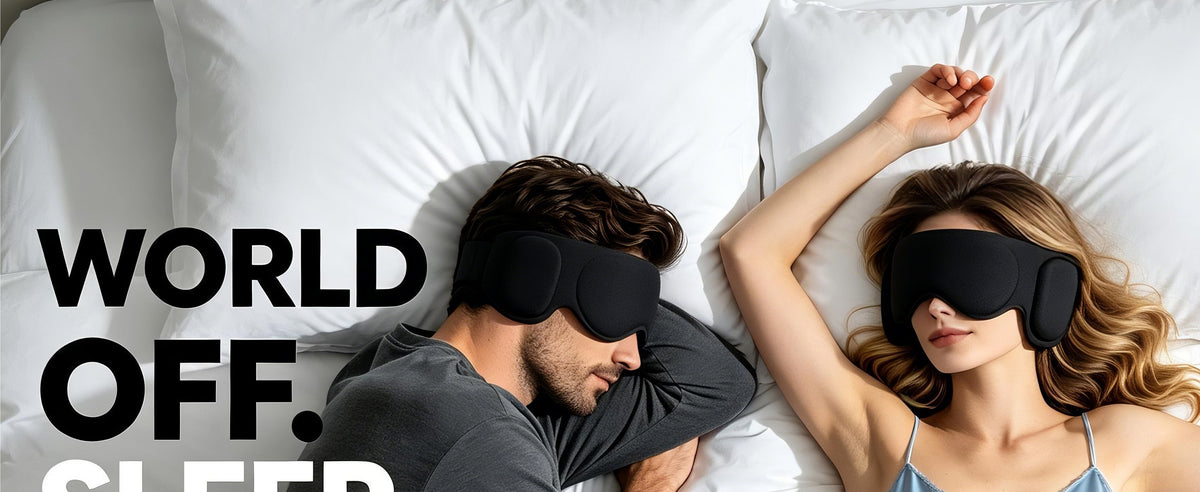
Waking up with a dry mouth or grogginess that lingers long after the alarm goes off can feel like a frustrating mystery. Often, the culprit is mouth breathing during sleep—something many people don’t realize they’re doing. Mouth taping is one approach that’s gained attention for gently encouraging nasal breathing overnight. When combined with a sleep mask that blocks disruptive light, the two tools may help create a calmer sleep environment.
Neither mouth taping nor a sleep mask is a medical treatment, but each targets a common sleep disruptor. Mouth breathing can contribute to snoring and a scratchy throat, while unwanted light can suppress melatonin and fragment rest. Pairing them addresses two problems at once, though the practice comes with safety caveats that deserve a clear look before you try it.
 What Is Mouth Taping and Why Pair It with a Sleep Mask?
Mouth taping involves placing a specially designed adhesive strip over the lips at night to keep the mouth closed, prompting nasal breathing. The intent is to reduce snoring and minimize dry mouth—two issues linked to mouth breathing—rather than treat any underlying condition. According to SleepApnea.org, the technique is not a substitute for medically prescribed therapies.
Adding a sleep mask to the routine tackles light exposure, which can interfere with the body’s internal clock and melatonin release. By blocking ambient light, a well-fitted mask helps support the circadian rhythm, making it easier to fall asleep and stay asleep. The pairing is practical: one tool promotes a nasal breathing pathway, the other shuts out visual stimuli. Still, anyone considering mouth taping should understand that evidence behind it is thin, and the practice isn’t safe for everyone.
What Research Says About Mouth Taping
A handful of studies hint at potential benefits, but direct, large-scale mouth taping trials are scarce. One investigation (PubMed 34072444) explored whether mouth taping could reduce snoring in people without sleep apnea; the findings suggested a possible improvement in mild snorers, though the sample was small. Broader research on nasal breathing—such as studies on sleep quality and air passage resistance (PubMed 19285849, 25450408)—supports the idea that breathing through the nose can lead to fewer sleep interruptions. What’s missing is proof that taping actually changes long-term breathing habits or resolves snoring for most people.
Clinicians remain cautious. The UpToDate guideline on adult snoring does not list mouth taping as a recommended treatment, which underscores the need for a professional diagnosis before self-experimenting. Meanwhile, user-reported outcomes, like those discussed in a Sleep Foundation review of ZzzTape, note that some individuals experience drier-mouth relief and softer snoring. Those reports are anecdotal, not clinical data, so they can’t confirm effectiveness across a wider population. The takeaway: mouth taping may be a supportive trick for some, but it lacks the evidence base to be considered a reliable snoring remedy.
 How to Use a Mouth Tape and Sleep Mask Safely
Ensure your nostrils are clear—if you have allergies or a stuffy nose, wait until breathing is easy. Apply a single strip horizontally, pressing lightly so it stays in place but doesn’t feel constricting. The goal is to encourage, not force, lip closure.
Skin prep matters. Wash and dry your face before applying tape, avoiding lotions that weaken adhesion. When removing, loosen an edge slowly and pull parallel to the skin rather than upward. For first-timers, wearing the tape for a short period while awake can make the sensation less startling. Some users leave a tiny gap at one corner or choose vented tape strips to provide a backup airway. These small adjustments can lower the sense of vulnerability.
Why a 3D Contoured Sleep Mask Can Improve Comfort
Adopting a sleep mask isn’t just about blocking light; the shape and materials determine whether you’ll actually keep it on all night. The Fismool 3D Soundproof Sleep Mask uses a contoured design that leaves space around the eyes, so there’s no pressure on the lids or lashes. That roominess allows natural REM-eye movement, which matters if you’re prone to claustrophobia with flat masks. Its sound-dampening fabric also quiets environmental noise—something thin silk masks can’t do.
Pairing this mask with mouth tape addresses two frequent sleep thieves: mouth breathing and light/noise intrusion. The combination won’t work for everyone, but for those who can tolerate taping, the 3D mask minimizes a common reason people abandon sleep masks: pressure discomfort. That detail might be the difference between a restless night and actually falling asleep faster.
 Frequently Asked Questions About Mouth Taping and Sleep Masks
Can mouth taping treat sleep apnea?
No. Sleep apnea is a medical condition that requires diagnosis and treatment such as CPAP or an oral appliance. Research does not support mouth taping as a therapy, and SleepApnea.org explicitly warns against it for people with apnea. Trying to tape through apnea episodes without supervised care carries serious risk.
What type of mouth tape is safest?
Hypoallergenic, medical-grade tapes designed for sleep are the safest choice. ZzzTape, for example, uses a silicone-based adhesive that releases gently. Avoid common household tapes like duct or packaging tape—they can damage sensitive lip skin, leave residue, and may cause allergic reactions.


