

Best Sleep Mask After LASIK: How 3D Eye Shields Protect Corneal Flaps & Prevent Rubbing
Undergoing laser vision correction—such as LASIK, PRK, or SMILE—is a life-changing milestone. In less than 15 minutes, decades of dependence on prescription glasses and contact lenses disappear.
However, the real foundation of 20/20 vision is established during the post-operative healing phase.
During standard LASIK, a femtosecond laser creates an ultra-thin corneal flap that is gently repositioned over the stromal bed without stitches. For the first two to four weeks, this microscopic flap is held in place purely by osmotic pressure and natural endothelial fluid pumps.
During the day, you can consciously stop yourself from touching your eyes. But at night, involuntary scratching, tossing against pillows, and sudden eye rubbing during deep sleep pose the greatest danger to your newly reshaped corneas.
Here is an in-depth clinical guide on why specialized 3D contoured sleep shields outperform clinic-issued taped plastic cups, and how to protect your eyes for flawless post-LASIK visual outcomes.
1. The Post-LASIK Nighttime Danger Zone
During the first 7 to 14 nights post-surgery, your corneas face three major nocturnal vulnerabilities:
                  POST-LASIK NOCTURNAL COMPLICATION PATHWAY

   [ Involuntary Sleep Reflexes / Pillow Drag ]
                         │
                         ▼
   ┌──────────────────────────────────────────────┐
   │ Mechanical Shear Force Against Eyelid        │ ──► Unconscious rubbing or pillow contact
   └──────────────────────────────────────────────┘
                         │
                         ▼
   ┌──────────────────────────────────────────────┐
   │ Corneal Flap Striae (Micro-Wrinkles) / Shift │ ──► Induces irregular astigmatism & pain
   └──────────────────────────────────────────────┘
                         │
                         ▼
   [ Requires Emergency Surgical Refloating & Extended Recovery ]
-
Involuntary Rapid Eye Movement & Rubbing Reflexes: During REM cycles or light waking transitions, mild itching from natural healing triggers an automatic rubbing reflex before conscious control kicks in.
-
Pillow Shear & Mattress Compression: If you roll onto your stomach or side, your pillowcase drags against the upper eyelid, exerting lateral shear forces directly onto the healing corneal stroma.
-
Severe Post-Operative Photophobia & Dry Eye: Laser ablation temporarily disrupts corneal sensory nerves, causing intense light sensitivity and accelerated tear evaporation in dry or air-conditioned bedrooms.
 2. Clinic Plastic Shields vs. 3D Memory Foam Eye Shields
Almost all refractive surgery clinics send patients home with clear, perforated plastic shields and rolls of paper medical tape. While functional, they create significant real-world challenges that disrupt recovery:
+----------------------------------------------------------------------------------------------------+
|                             PLASTIC TAPED SHIELDS VS. 3D CONTOURED SLEEP MASK                      |
+------------------------------+---------------------------------------+-----------------------------+
| RECOVERY FACTOR              | CLINIC TAPED PLASTIC SHIELDS          | FISMOOL 3D ERGONOMIC SHIELD |
+------------------------------+---------------------------------------+-----------------------------+
| Corneal Contact Clearance    | Rigid dome (Protective)               | 20mm Deep Recessed Dome     |
| Skin & Adhesive Irritation   | Tape causes contact dermatitis/redness| Snag-Free Glide Strap       |
| 100% Photic Blackout         | 0% (Clear plastic lets in all light)  | 100% Total Blackout         |
| Ocular Hydration Chamber     | Open holes accelerate dry eye         | Sealed microclimate barrier |
| Side-Sleeper Pillow Comfort  | Hard edges dig painfully into skin    | Ultra-tapered memory foam   |
+------------------------------+---------------------------------------+-----------------------------+
The Drawbacks of Medical Tape and Plastic Cups
-
Contact Dermatitis & Skin Rips: Ripping adhesive tape off sensitive periorbital skin every morning causes irritation, redness, and micro-tears around the cheekbones.
-
Zero Light Shielding: Clear plastic shields let in 100% of room light, aggravating post-operative photophobia and making daytime recovery naps nearly impossible.
-
Tape Failure: As facial oils and sweat accumulate overnight, tape edges loosen. Many patients wake up to find their plastic shields have fallen off on the pillow, leaving corneas exposed.
3. How 3D Zero-Pressure Architecture Protects Healing Corneas
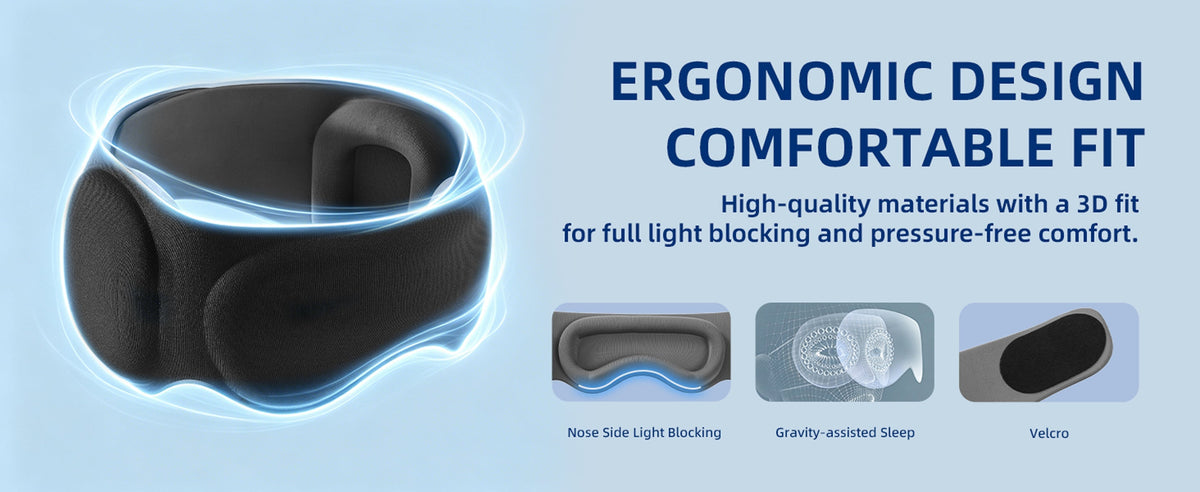
A precision-engineered 3D sleep mask acts as a soft, padded ophthalmic cage, combining the structural clearance of a medical shield with the comfort of memory foam.
+------------------------------------------------------------------------------------------------+
|                                3D POST-LASIK PROTECTION PILLARS                                |
+--------------------------+-----------------------------------+---------------------------------+
| DESIGN COMPONENT         | RECOVERY MECHANISM                | CLINICAL BENEFIT                |
+--------------------------+-----------------------------------+---------------------------------+
| 1. Deep Recessed Domes   | 20mm Elevated Orbital Chamber     | Zero fabric touch on corneas    |
| 2. Bone-Anchored Rim     | Rests on Cheekbone & Brow Rim     | Deflects hands & pillow impact  |
| 3. Moisture Microclimate | Minimizes AC airflow across eyes  | Prevents post-op dry eye flare  |
| 4. 100% Nasal Blackout   | Self-molding Memory Foam Baffle   | Calms laser-induced photophobia |
+--------------------------+-----------------------------------+---------------------------------+
1. Structural Suspension (Zero Corneal Contact)
The interior of a 3D mask features deep, hollow cavities. The soft memory foam perimeter rests exclusively against the rigid zygomatic arch (cheekbones) and supraorbital ridge (brow). This creates a protective dome over the eye, ensuring that neither the mask fabric, your pillow, nor your hands can touch the corneal flap.
2. The Nocturnal Moisture Chamber Effect
Post-LASIK dry eye affects over 90% of patients during the first month. An enclosed 3D contour reduces ambient airflow from ceiling fans and air conditioning, locking in the soothing moisture from your prescribed lubricating eye drops throughout the night.
3. Absolute 100% Photophobia Relief
Laser vision correction leaves corneal nerves hypersensitive to blue and white light. A precision-molded 3D blackout mask ensures a completely dark recovery environment, calming the visual cortex and accelerating cellular repair.
 4. The 4-Step Post-LASIK Nighttime Recovery Protocol
To protect your vision and ensure optimal flap adhesion, follow this nightly routine for the first 14 to 30 days after your procedure:
-
Administer Prescribed Drops 10 Minutes Prior: Apply your antibiotic, steroid, or preservative-free artificial tears. Wait 10 full minutes so the drops coat the ocular surface and do not transfer onto the mask lining.
-
Never Wear Flat Cloth or Silk Eye Covers: Avoid traditional flat sleep masks at all costs. Flat fabric directly compresses the corneal surface, which can dislodge the healing flap.
-
Position the 3D Mask on Stable Facial Bones: Ensure the inner dome stays suspended over the eyes, with all contact resting on the forehead and cheekbones.
-
Keep the Strap Snug, Not Tight: Rely on the 3D contour to stay in place rather than overtightening the strap, ensuring optimal blood circulation around the temples.
The Fismool Medical-Grade Ergonomic Standard
At Fismool, we engineered our 3D Ergonomic Sleep Mask Collection with high-precision specifications ideal for post-refractive surgery protection:
-
Extra-Deep Orbital Cavities: Generous 20mm+ eye dome depth allows complete, unrestricted blinking during REM sleep with zero corneal or lash contact.
-
Impact-Absorbing Memory Foam: Slow-rebound, open-cell foam acts as a shock-absorbing buffer, neutralizing accidental nighttime hand bumps or pillow friction.
-
Tape-Free, Snag-Free Glide Band: Smooth elastic strap anchors securely around the back of the head without adhesive tape, protecting sensitive skin.
-
OEKO-TEX Certified Hypoallergenic Lining: Ultra-smooth, breathable fabric prevents bacterial accumulation, keeping post-operative eyes pristine and hygienic.
 Frequently Asked Questions
Q1: Can I wear a regular sleep mask after LASIK surgery?
No. Traditional flat sleep masks press directly against your eyelids and corneas, which can cause micro-wrinkles (striae) or dislodge the delicate corneal flap. You should only wear a rigid shield or an elevated 3D contoured sleep mask that provides deep eye clearance with zero fabric contact on the eyes.
Q2: How long do I need to wear eye protection while sleeping after LASIK?
Most refractive surgeons recommend wearing protective eye shields while sleeping for at least 7 to 14 consecutive nights after LASIK. If you tend to toss and turn or sleep with pets in the room, continuing protection for up to 30 nights provides added safety against accidental rubbing.
Q3: How does a 3D sleep mask prevent dry eyes after laser surgery?
A 3D sleep mask forms an enclosed orbital microclimate. It blocks moving drafts from room fans, heaters, and air conditioners from sweeping across the ocular surface, locking in natural tear vapor and prescribed lubricating drops while preventing nocturnal eyelid friction.
Secure Your Post-LASIK Recovery
Do not let involuntary nighttime rubbing or painful taped shields compromise your vision. Explore the Fismool 3D Ergonomic Zero-Pressure Collection and experience safe, 100% blackout protection engineered for gentle post-operative healing.


