

Tinnitus & Nighttime Silence: Why Sound Masking Sleep Masks Beat Standard Earplugs (2026 Guide)
When getting ready for bed, most people search for absolute quiet. But if you live with tinnitus (chronic ringing, buzzing, or hissing in the ears), a silent bedroom can feel like a sensory trap.
During the day, ambient background noise—conversations, office hums, outdoor traffic—naturally cloaks internal ear sounds. But the moment you turn off the lights and your head hits the pillow in a dead-quiet room, that high-pitched tone seems to amplify tenfold.
The intuitive reaction for many light sleepers is to insert a pair of foam or silicone earplugs. However, for tinnitus sufferers, standard earplugs often make the ringing substantially worse.
In this 2026 Tinnitus Sleep Guide, we analyze the neurobiology of auditory gain, compare sound-masking technology vs. passive earplugs, and explain why an integrated 3D sound-masking sleep mask is one of the most effective non-invasive tools for falling asleep with tinnitus.
1. The Neurobiology of Tinnitus in Silence: Central Auditory Gain
Subjective tinnitus does not originate entirely in the ears; it is sustained by the central auditory pathway in the brain.
                   THE TINNITUS AUDITORY GAIN LOOP IN SILENCE

   [ Dead-Quiet Bedroom Environment ]
                  │
                  ▼
   ┌──────────────────────────────────────────────┐
   │ Sensory Deprivation in Cochlear Pathways     │ ──► Absence of external sound waves
   └──────────────────────────────────────────────┘
                  │
                  ▼
   ┌──────────────────────────────────────────────┐
   │ Auditory Cortex Increases "Neural Gain"      │ ──► Brain searches desperately for acoustic input
   └──────────────────────────────────────────────┘
                  │
                  ▼
   ┌──────────────────────────────────────────────┐
   │ Phantom Tinnitus Signals Amplified           │ ──► High-pitched ringing becomes hyper-focused
   └──────────────────────────────────────────────┘
                  │
                  ▼
   [ Sympathetic Arousal (Cortisol Spike) & Sleep Latency Prolonged ]
When you enter a silent room, the brain experiences a form of acoustic sensory deprivation. In response, the dorsal cochlear nucleus and auditory cortex increase their internal volume sensitivity ("neural gain") to search for incoming sounds.
In the absence of ambient noise, this hyperactive neural gain locks directly onto your brain's internal phantom frequencies, turning a minor ringing sensation into a loud, sleep-shattering roar.
 2. Why Traditional Earplugs Worsen Tinnitus
Inserting standard foam, wax, or silicone earplugs blocks incoming external decibels. For tinnitus, this creates two major neurological drawbacks:
+----------------------------------------------------------------------------------------------------+
|                                 FOAM EARPLUGS VS. SOUND-MASKING 3D MASKS                           |
+------------------------------+---------------------------------------+-----------------------------+
| ACOUSTIC & COMFORT FACTOR    | STANDARD FOAM / SILICONE EARPLUGS     | FISMOOL 3D SOUND-MASKING    |
+------------------------------+---------------------------------------+-----------------------------+
| Impact on Tinnitus Volume    | Amplifies internal ringing (Worst)    | Neutralizes & masks ringing |
| Auditory Neural Gain State   | Spikes hyper-gain sensitivity         | Calms cortical gain         |
| Ear Canal Friction & Soreness| High (Painful when side-sleeping)     | Zero (External flat drivers)|
| Cerumen (Earwax) & Infection | Traps moisture, pushes wax inward     | Open canal air ventilation  |
| Visual Blackout Synergy      | None (Requires separate eye cover)    | Integrated 100% 3D Blackout |
+------------------------------+---------------------------------------+-----------------------------+
-
Creates Total Acoustic Deprivation: By shutting out 25–32 decibels of ambient room sound, earplugs force your brain to listen exclusively to the tinnitus tone, worsening sleep anxiety.
-
The Occlusion Effect: Sealing the external auditory canal traps internal bone-conducted sounds (like your own pulse or heartbeat), adding thumping vascular noise to your existing high-frequency ringing.
-
Cartilage Compression for Side Sleepers: Stiff foam barrels inside the ear canal create throbbing cartilage inflammation when pressed against a pillow for 8 hours.
3. The Science of Sound Masking: Acoustic Habituation
Sound masking does not attempt to cure tinnitus; instead, it provides a soothing, structured acoustic blanket that blends the ringing into the background, allowing your brain to habituate and ignore it.
+------------------------------------------------------------------------------------------------+
|                             OPTIMAL SOUND FREQUENCIES FOR TINNITUS                             |
+--------------------------+-----------------------------------+---------------------------------+
| NOISE PROFILE            | ACOUSTIC SPECTRUM                 | BEST FOR TINNITUS TYPE          |
+--------------------------+-----------------------------------+---------------------------------+
| White Noise              | Equal energy across all freqs     | General background masking      |
| Pink Noise               | Deeper bass, balanced mid-tones   | High-pitched hiss / Easing SWS  |
| Brown (Red) Noise        | Heavy low-frequency rumble        | Low-frequency buzzing & rumbles |
| Nature Soundscapes       | Modulated rain / ocean waves      | Neurological distraction & calm |
+--------------------------+-----------------------------------+---------------------------------+
-
Pink Noise: Decreases in energy by 3 decibels per octave as frequency rises. This matches human hearing thresholds much more naturally than harsh white noise, soothing high-frequency ringers while encouraging slow-wave sleep.
-
Brown Noise: Emphasizes deep, low-frequency soundscapes (like distant waterfalls or heavy rain), effectively cloaking low humming tinnitus tones without waking light sleepers.
 4. How Fismool 3D Bluetooth Masks Revolutionize Tinnitus Recovery
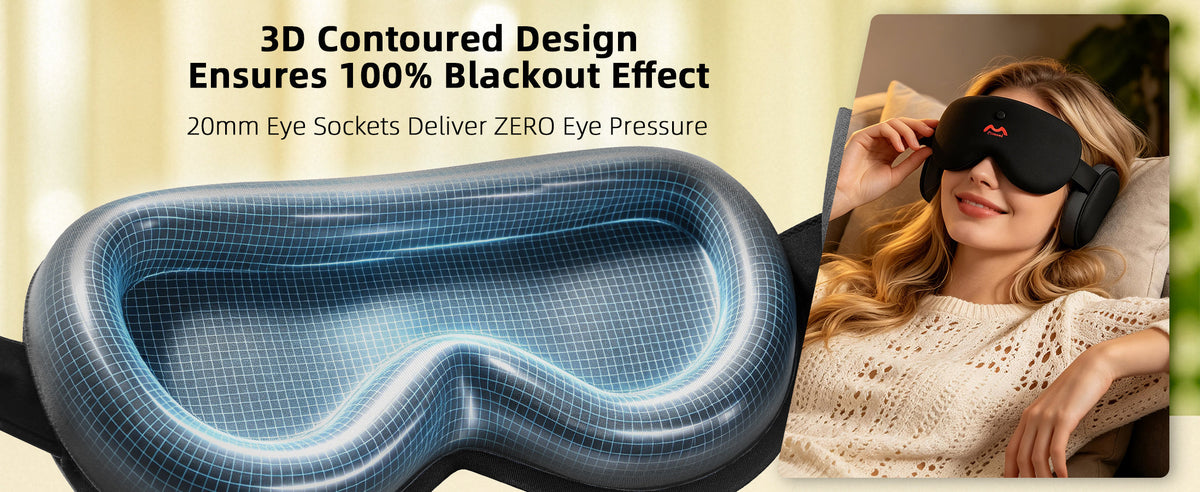
Rather than forcing users to sleep in bulky headphones or painful in-ear buds, the Fismool 3D Bluetooth Sound-Masking Mask integrates thin acoustic drivers into an ergonomic, zero-pressure blackout chassis.
+------------------------------------------------------------------------------------------------+
|                                3D SOUND-MASKING RECOVERY PILLARS                               |
+--------------------------+-----------------------------------+---------------------------------+
| DESIGN COMPONENT         | MECHANISM                         | CLINICAL BENEFIT                |
+--------------------------+-----------------------------------+---------------------------------+
| 1. Wafer-Thin Drivers    | 0.2" foam-padded external drivers | Zero ear canal pressure         |
| 2. Deep Eye Chambers     | Elevated 3D orbital sockets       | 0g pressure on eyelids/lashes   |
| 3. True 100% Blackout    | Sculpted nasal light baffle       | Maximizes melatonin production  |
| 4. 12+ Hour Playback     | Low-energy Bluetooth 5.3 chip     | Consistent masking all night    |
+--------------------------+-----------------------------------+---------------------------------+
1. Zero Ear Canal Insertion
The wafer-thin speakers rest softly against the outer ear rather than sitting inside the canal. This ensures natural ear airflow, prevents wax impaction, and allows side sleepers to lay their head flat against firm pillows with zero pain.
2. Dual Sensory Lockdown: Sound Masking + 100% Darkness
Tinnitus triggers sympathetic anxiety, which makes the visual system hyper-sensitive to light. Fismool pairs calming soundscapes with complete 100% photonic darkness, giving both your auditory and visual cortex an immediate, unified signal to rest.
The 4-Step Nighttime Protocol for Tinnitus Sleep Onset
To fall asleep smoothly with tinnitus, follow this evidence-based bedtime protocol:
-
Select Continuous Pink or Rain Soundscapes: Choose a steady, non-looping track on your favorite sleep app (such as ambient rain or pink noise). Avoid tracks with sudden chime changes or erratic volume spikes.
-
Set the Volume Just Below Your Tinnitus: Adjust the volume so the sound does not completely drown out the ringing, but rather mixes softly with it (partial masking). This encourages long-term neurological habituation.
-
Engage the 3D Blackout Seal: Position the Fismool 3D mask comfortably over your eyes, ensuring the nose baffle blocks all ambient light without needing tight band pressure.
-
Practice Autogenic Breathing: As the sound blanket blends with your tinnitus, focus on slow diaphragmatic breathing to lower your resting heart rate and transition smoothly into delta slow-wave sleep.
 Frequently Asked Questions
Q1: Why do earplugs make tinnitus louder at night?
Earplugs create complete external acoustic silence. In quiet environments, the brain automatically increases its internal auditory gain sensitivity, amplifying phantom neural signals and making the perceived tinnitus ringing sound much louder.
Q2: What is the best sound to fall asleep to with tinnitus?
Pink noise, brown noise, and rainfall soundscapes are considered the most effective sounds for tinnitus sleep. Unlike harsh white noise, pink and brown noise feature warmer, lower frequencies that blend naturally with high-pitched ringing without disturbing deep sleep.
Q3: Can you sleep on your side with a Bluetooth sound-masking sleep mask?
Yes, provided the mask is engineered with ultra-thin drivers. Fismool’s 3D Bluetooth Sleep Mask uses wafer-thin 0.2-inch speakers wrapped in memory foam, allowing side sleepers to rest their head flat on a pillow with zero temple or ear cartilage pressure.
Silence the Ringing with Soothing Soundscapes
Do not let bedroom silence turn your tinnitus into sleepless nights. Explore the Fismool 3D Bluetooth Sound-Masking Mask Collection and discover the pain-free acoustic sanctuary engineered for side sleepers and sensitive ears.


