

Earn {{points}} for every {{amount}} you spend and turn them into discounts at checkout.
Join nowNews

Best Travel Sleep Masks, Tested for Fit and Light Blocking
Long-haul flights, bright hotel alarm clocks, and cabin lights that refuse to dim—travel throws a lot of light at you right when you want to sleep. Light cues are deeply tied to your internal clock. When the eyes catch light, the brain slows melatonin production, the hormone that helps you drift off. Block that signal, and you give your body a better shot at sleep in places it wasn’t designed to rest. CNN Underscored notes that the American Academy of Sleep Medicine and Sleep Research Society both emphasize a dark environment for restorative sleep, and sleep experts like Molly Atwood, PhD, of Johns Hopkins Medicine have described light exposure as a built-in cue that can sabotage sleep onset. A well-fitted travel sleep mask is a wildly portable tool—it can't fix a cramped seat or engine drone, but it can rewrite the light story almost anywhere. Why a Good Travel Sleep Mask Matters Sleep during travel is rarely easy, and light is one of the more controllable variables. Even dim light can nudge your circadian rhythm off track, making it harder to fall asleep and stay asleep. Public transit hums with screens, overhead bulbs, and reading lamps; hotel rooms often have uncooperative blackout curtains. A travel mask that fits well can cut out that ambient glow, creating a personal dark space in the middle of chaos. According to the American Academy of Sleep Medicine and Sleep Research Society, adults generally need seven or more hours of sleep, and darkness helps signal the brain to produce melatonin. Johns Hopkins sleep researcher Molly Atwood, PhD, has pointed out that light entering the eyes—even during sleep—can reduce melatonin output. The right mask acts as a simple, low-tech barrier, screening out the wavelengths that interrupt that process. It won't solve noise or stress, but it can mean the difference between lying awake under a flickering seatback screen and getting actual rest. What the Reviews Compared Recent sleep mask roundups from CNN Underscored, The Guardian, WIRED, and Consumer Reports all took slightly different approaches, but a few consistent threads emerged. CNN Underscored ran a six-week test that included shining a bright ring light from eight inches away to measure light blockage. The Guardian spent nine weeks testing 32 masks, covering everything from contoured foam to flat silk. WIRED and Consumer Reports evaluated comfort, fit, and travel-friendliness over multiple nights, often with testers who sleep in different positions. The common criteria across these reviews: comfort on various face shapes, light-blocking ability, material quality, breathability, and how well the mask stays put through the night. Testers included side sleepers, back sleepers, and people who wake at the slightest glimmer. One recurring frustration—noted by several sources—was light sneaking in near the nose, especially on contoured masks. Some models with deep eye cups offered good lash clearance but dug into the temples during side sleeping. No mask pleased everyone, which underscores how personal fit really is. Key Features to Consider in a Travel Sleep Mask The material under your eyelids matters a lot. Mulberry silk, especially long-fiber at 22 momme, shows up often in source testing for its softness and the way it glides over skin. The Quince Mulberry Silk Beauty Sleep Mask uses 22-momme silk at a lower price, while the Blissy Dream Set does the same at a higher tier. Cotton or bamboo breathes well and can feel cooler, though it may not feel as smooth. Foam contours keep fabric off your lashes but add bulk. Shape is the next big divide. Flat masks pack down to nothing yet can press against eyelashes and occasionally shift. Contoured 3D masks create a dome over each eye, which can save lash extensions and reduce smudging, but as WIRED and The Guardian noted, they can create uncomfortable pressure points when you roll onto your side. The Alaska Bear Contoured Silk Eye Mask was called out for scrunching up and allowing light near the nose during side sleeping—a good reminder that contoured doesn't automatically equal better. Strap design makes or breaks the seal. Adjustable Velcro or elastic straps let you fine-tune tension for your head size. Wraparound styles that cover the ears can muffle sound, which some travelers love and others find disorienting. For travel, packability and easy care rise in importance; a mask you can hand-wash in a hotel sink and air-dry overnight is more practical than one that needs a delicate wash bag. A carry pouch that doesn't crinkle loudly is a small but meaningful detail. Top Travel Sleep Masks by Use Case These four masks stood out across multiple review sources, each solving a different travel problem. The table below summarizes source-reported strengths and caveats, after which each mask gets a closer look. Product Best For Source-Reported Strength Caveat Quince Mulberry Silk Beauty Sleep Mask Affordable silk on the go Soft 22-momme silk, slightly larger shape than Blissy for a comfortable seal May scrunch on side sleepers; hand-wash only Blissy Dream Set Luxurious feel for light packers Premium 22-momme silk, adjustable strap praised for staying put Can feel dainty on larger heads or thick hair Drowsy Eyelash-Protecting Mask Eyelash extensions and mascara wearers Tallest mask tested; zero pressure on lashes, good nose seal Bulkier than flat silk; contoured cups may bother side sleepers Fismool 3D Air Bluetooth Sleep Mask Blocking noise without earbuds Bluetooth speakers integrated into a contoured, side-sleeper-friendly design Needs charging; heavier than non-tech masks Fismool 3D Air Bluetooth Sleep Mask – Tech-Enabled Mask for Noisy Environments Sometimes blocking light isn’t enough—engine hum, crying babies, or a chatty seatmate can destroy any hope of sleep. The Fismool 3D Air Bluetooth Sleep Mask combines a contoured eye mask with flat-profile Bluetooth speakers, streaming audio without the need for earbuds pressing into your ears. Source testers appreciated that the 3D shape gives lashes room, and the electronics don’t add bulk against the face, making side sleeping possible. You’ll need to remember to charge it before a long flight, and at a higher weight than a simple silk mask, it may feel noticeable on the face after hours. Sound quality won’t compete with dedicated headphones, but it’s enough for white noise or a podcast. For travelers who battle both light and noise, it bundles two fixes into one device. How to Pick the Right One for Your Next Trip Think about what actually keeps you awake. If you crave that cool, glide-on-skin sensation and don’t mind a quick sink wash, silk models like the Quince or Blissy make sense. If smudged mascara or bent lash extensions are the enemy, the Drowsy’s no-touch depth is worth the packing penalty. And if the sound of the cabin is what drains you, a Bluetooth mask like the Fismool can replace a whole tangle of earbuds and fabric. Then get specific about fit. An adjustable strap can help a mask stay put across different head sizes, while wraparound styles may muffle sound but feel claustrophobic to some. Sleep position matters too: flat masks often suit side sleepers better, while back sleepers might prefer contoured cups. Try any new mask at home first—several review testers discovered light leaks or pressure points only after a few full nights, not during a quick trial. Frequently Asked Questions Can a sleep mask really help me sleep on a plane? A well-fitting mask can simulate darkness even in a bright cabin, signaling your brain to produce melatonin. Sleep experts from Johns Hopkins and the AASM note that minimizing light exposure is a key part of supporting sleep quality, though a mask won’t cure noise or cramped seats. Are weighted sleep masks good for travel? Some testers found a light, evenly distributed weight calming, but heavier masks can feel suffocating or cause overheating. TheraIce’s weighted design, for example, let in a little light near the nose and was hard to fall asleep in for one reviewer. If you’re curious, try it at home first, and leave the heaviest models out of your carry-on to save space.
Learn more
How to Get Dry Eye Relief Without Eye Drops: A Step-by-Step Routine
Waking up with eyes that feel like sandpaper. Blinking against a gritty sensation that won't fade by mid-morning. Many people accept this as normal background noise — half of adults experience dry eye symptoms, yet most never mention it to a doctor. The discomfort gets filed under "just the way things are." Dry eye isn't only about low moisture. It's often a problem of tear film instability — the delicate oil-water-mucus balance that keeps the eye's surface smooth and protected. When the meibomian glands along the eyelid margins clog or underperform, the tear's oily outer layer thins, and moisture evaporates too quickly. Screen time, dry indoor air, and even incomplete blinking can accelerate that breakdown. The four-step routine below targets those mechanisms directly, without reaching for a bottle of artificial tears. Understanding Dry Eye and Non-Drop Relief What many people call "dry eye" is actually a tear film that breaks apart too fast. The National Eye Institute estimates 16.4 million Americans deal with this condition, and the number keeps climbing. The trouble often starts in the meibomian glands — tiny oil-producing structures along the lid margin. When they get blocked or inflamed, the tear's lipid layer loses integrity, and moisture escapes before the next blink can replenish it. Most people wait. The discomfort becomes familiar, something to squint through rather than address. But gland dysfunction that simmers untreated can worsen over time, and Eastside Eye and Vision Center points out that chronic dry eye carries real risks, including corneal surface damage. The steps below aren't a cure — chronic dry eye is managed, not erased — but they may ease symptoms enough to reduce reliance on artificial tears, especially when practiced together. 4 Steps to Relieve Dry Eye Without Drops No single habit will rebuild a stable tear film overnight. But heat, blinking, humidity, and daily lifestyle adjustments each tug at a different thread of the problem. Stacking them — doing a warm compress in the morning, blink exercises during screen sessions, keeping a humidifier running at your desk, and protecting your eyes overnight — can shift the balance toward better tear quality and less evaporation. Step 1: Apply a Warm Compress Blocked meibomian glands hold oil that's thickened into a toothpaste-like consistency. Heat changes that. A warm compress held over closed eyes for 5 to 10 minutes once or twice daily can soften the solidified oils and coax them to flow again, according to Aiello Eye Institute. Heated eye compress masks — the kind you microwave for about 20 seconds — offer a more even, sustained warmth, and the Pacific Eye Institute suggests aiming for an 8- to 10-minute session with these. What trips people up is impatience. A single warm compress feels nice, but unclogging glands takes consistency. Daily use for several weeks may be needed before you notice a meaningful difference. And be careful with temperature — the compress should feel comfortably warm, not hot. Skin on the eyelids is thin; too much heat irritates it, which is the opposite of helpful. Step 2: Practice Blink Exercises Staring at a screen slashes your blink rate. The National Institutes of Health has documented that computer users blink far less often, and when they do, the blink is frequently incomplete — the eyelids don't meet fully. That leaves a strip of exposed cornea where the tear film never gets redistributed. An Investigative Ophthalmology & Visual Science study linked this partial blinking pattern to meibomian gland dysfunction, as the glands rely on the mechanical squeeze of a full blink to release oil. The fix is mechanical and almost absurdly simple. Close your eyes for two full seconds. Then squeeze the lids together deliberately for another two seconds. Repeat this five or six times, up to 20 times a day. The Pacific Eye Institute also recommends a 20-20 rule: every 20 minutes, close your eyes for 20 seconds. It's not meditation — it's giving your tear film a chance to spread evenly and your glands a chance to secrete. Keep that rhythm going through a workday and the cumulative effect on tear stability may surprise you. Step 3: Control Your Environment's Humidity Indoor air is punishingly dry, especially in heated winter rooms or air-conditioned summer spaces. When ambient humidity drops, the tear film evaporates faster than the glands can replenish it. A humidifier pushes back by keeping moisture in the air — and, by extension, on the surface of your eyes. Oak Street Health breaks down the choice this way: cool-mist humidifiers are the safer pick year-round, especially in homes with children or pets, because there's no risk of burns from hot water. They're also more energy-efficient. Warm-mist units can feel comforting in colder months but collect mineral buildup faster and need more frequent cleaning. Either way, aim for 30–50% humidity, and place the unit in your bedroom or near your primary workstation — wherever you spend the most hours with your eyes open. Step 4: Adjust Daily Habits for Tear Health Tear production doesn't exist in a vacuum. The body pulls water from your overall hydration pool to make tears, and the Pacific Eye Institute notes that 8 to 10 glasses of water a day is a reasonable target. Sleep matters too — a National Institutes of Health study found that people getting 7 to 8 hours of quality sleep produce healthier tears than those who skimp. The omega-3 picture is more nuanced than it once seemed. The American Association of Ophthalmology acknowledges the biological rationale — DHA, a component of omega-3s, supports meibomian gland function — but more recent evidence has pulled back from earlier enthusiasm, suggesting supplementation may not deliver the same effect for everyone. If you're considering fish oil or an omega-3 supplement, running it past your doctor is the prudent path. On the flip side, alcohol appears to worsen dry eye, according to an NIH study, so cutting back — especially in the evening — may help preserve overnight tear stability. And don't overlook the simplest screen-break habit: looking away and blinking fully every 20 minutes dials down digital eye strain. Bonus Tip: Protect Your Eyes Overnight with a Sleep Mask Some people sleep with their eyelids slightly parted — a gap no one notices until they wake up with eyes that feel scraped raw. Low bedroom humidity compounds the problem, leaving the tear film exposed to evaporation for hours. A sleep mask creates a sealed microenvironment that traps moisture against the eye's surface. The Fismool 3D Sleep Mask for Dry Eyes addresses a specific complaint: pressure. Many flat masks press directly on the eyelids, which can distort the cornea and trigger discomfort. The contoured 3D design leaves a hollow over each eye, so you can blink freely underneath without fabric grazing the lid. Think of it as an extra layer of overnight protection — not a substitute for the four steps above, but a quiet boost that works while you're not thinking about it. When to See an Eye Doctor Some signals shouldn't be waited out. Persistent pain, blurred vision that doesn't clear with blinking, mucus discharge, or a sudden worsening that home care doesn't touch all warrant a visit. The same goes if you can't comfortably wear contact lenses anymore; that's a functional red flag, not just an annoyance. An eye doctor can assess your gland function directly — something no home routine can replicate — and map out a treatment plan that goes beyond self-care. Prescription drops like Restasis (cyclosporine) target inflammation to boost tear production, while Xiidra (lifitegrast) blocks certain proteins tied to dry eye, as explained by Willis Knighton Eye Institute. For more severe cases, temporary punctal plugs (which dissolve over time) or permanent silicone plugs can block tear drainage, and scleral lenses — large, fluid-filled contacts — can trap moisture against a damaged cornea. The earlier dry eye is evaluated, the better the odds of avoiding long-term surface damage. Common Mistakes That Worsen Dry Eye Reaching for the same bottle of lubricating drops multiple times a day can backfire if those drops contain preservatives. The preservatives that keep a multi-dose bottle shelf-stable can irritate the ocular surface with heavy use. Willis Knighton Eye Institute notes that preservative-free single-use vials are a safer choice for anyone applying drops more than four times daily. Skipping the warm compress when symptoms ease up lets glands re-clog. The Pacific Eye Institute emphasizes consistency — the benefit builds over weeks, not days. Incomplete blinking is a subtler saboteur: a person can sit through an entire meeting, staring at a screen, and never once close their lids fully. That starves the tear film of lipids. Pair that with chronic dehydration or poor sleep, and the eyes have very little to work with by late afternoon. Each of these patterns is fixable, but they often go unnoticed precisely because they've become automatic. Frequently Asked Questions How long does it take to see improvement from these steps? Some people feel slight relief within days, but unclogging meibomian glands with warm compresses often takes weeks of daily use. Chronic dry eye is typically managed long-term rather than fully resolved, and individual responses vary considerably. Can I use artificial tears along with these steps? Yes. Preservative-free drops can bridge the gap while natural tear function improves. Thicker gels or ointments provide longer overnight relief but blur vision, so they're best applied just before bed as a temporary support.
Learn more
Bluetooth Sleep Masks for Couples: A Practical Solution for Sound Sensitivity
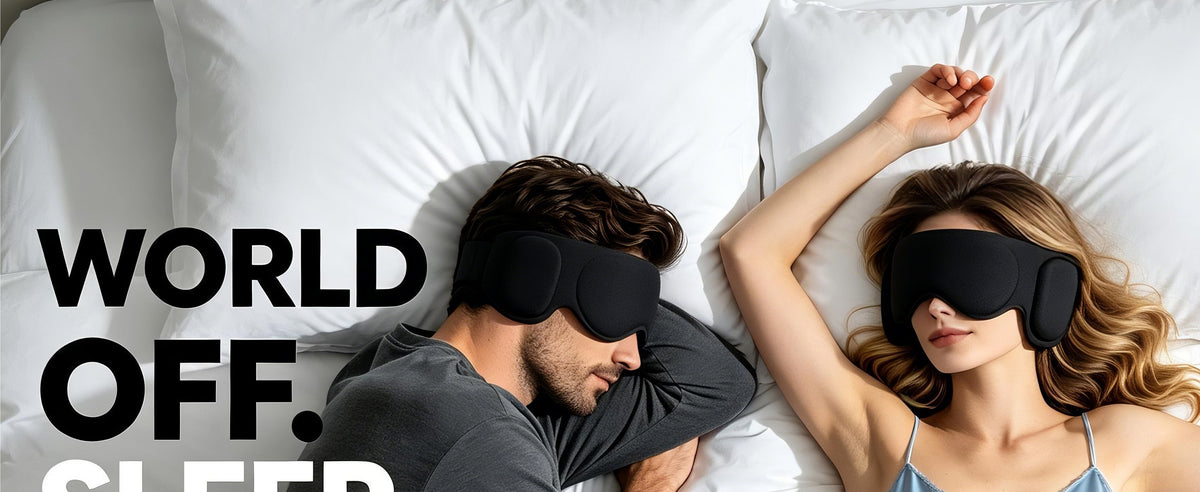
Sharing a bed with someone you love doesn't always mean sharing a peaceful night. For sound-sensitive sleepers, the smallest noises—a partner's breathing rhythm shifting, a soft snore, the rustle of sheets—can jolt them awake, leaving one person frustrated and the other oblivious. When earplugs feel invasive and earbuds dig into your ears the moment you roll onto your side, the options can feel thin. Some couples try white noise machines, but a room-filling hum can bother the very partner who sleeps just fine in silence. Others reach for regular sleep masks, only to find they block light but do nothing for sound. The challenge isn't just finding a solution—it's finding one that doesn't create new problems for the person lying next to you. The Sound-Sensitive Sleeper’s Dilemma Sound sensitivity during sleep can turn a shared bed into a minefield. Even mild snoring, breathing patterns, or the distant thud of a neighbor's door can trigger a stress response that derails the night. According to Men's Health, traditional earbuds are painful for side sleepers and prone to falling out, while earplugs can lead to ear infections with prolonged use. It's a specific kind of discomfort—one that leaves you awake at 3 a.m. feeling like the only person in the house who can hear the refrigerator humming. The partner who sleeps soundly often doesn't grasp why earplugs aren't a simple fix. But they haven't experienced the way hard plastic presses into the ear canal when your head is on the pillow, or the claustrophobic weight of a flat sleep mask that sits too close to the eyes. CampfireHQ notes that flat masks can feel suffocating, and adding uncomfortable audio gear on top of that only compounds the problem. What's needed is a tool that addresses both light and sound without forcing one partner to sacrifice comfort. How Bluetooth Sleep Masks Bridge the Gap A Bluetooth sleep mask solves this by putting thin, flat speakers inside a light-blocking eye cover. One person can listen to white noise, a podcast, or calming music directly through the mask while the other hears nothing—no speaker hum, no audio bleed, no disturbance. You're essentially creating a personal sound bubble that follows you as you shift positions. What makes these masks work for couples is the speaker design. Unlike hard earbuds, modern masks use ultra-thin drivers that sit flush against the fabric, so there's no rigid component digging into your ear when you lie on your side. The Guardian reviewed several models and found the best ones distributed pressure evenly across the headband or mask body, making them comfortable for extended wear. Many include built-in white noise tracks, which can be quicker than pairing with an app—though most also let you stream your own audio. The result isn't noise cancellation, but a consistent, masking sound that lets your brain stop tracking every irregular noise from across the pillow. Features That Matter Most for Couples Battery life is the first thing to check. A mask that dies at 4 a.m. doesn't just stop playing audio—it can jolt you awake with a low-battery warning, as CampfireHQ reported with the LC-Dolida model. Look for at least 8 to 10 hours of playback. The Perytong headband offers up to 10 hours per charge, SleepPhones lasts up to 12 hours, and the Lightimetunnel mask reaches up to 13 hours on a single charge. That extra margin means you're not racing the clock from the moment you lie down. Speaker thinness is equally important. The MUSICOZY mask uses speakers that reviewers describe as notably thin and non-bulky, avoiding the hard plastic lumps found in cheaper alternatives. For side sleepers, this can make the difference between a mask you forget you're wearing and one you tear off at 2 a.m. The Snoozeband, by contrast, forces you to unzip the fabric and physically reposition the speakers if they shift—an inconvenience that becomes irritating when you're half-asleep. Light blocking is the mask's other half. The Lightimetunnel claims 100% light blockage, which matters if your partner reads in bed or you live on a street with bright security lights. Even partial blackout can help signal to your brain that it's time to sleep, and deeper darkness may support melatonin production. But total blackout isn't everyone's priority—some users just want enough coverage to avoid early-morning glare. Bluetooth Sleep Masks to Consider Different masks suit different sleepers. The picks below are drawn from expert-tested reviews and prioritize comfort, battery life, and couple-friendly features. Each one addresses a specific set of needs, whether that's side sleeping, complete darkness, or all-night audio. MUSICOZY Wireless Sleep Mask The MUSICOZY stands out for its IPX6 waterproof rating, which makes it sweat-resistant and easy to clean—a practical advantage if you tend to run warm overnight. Its thin speakers avoid the hard plastic pressure points that plague some designs, and CampfireHQ noted that the lack of bulk makes it comfortable for side sleeping. The fabric doesn't trap heat excessively, and the controls are accessible without removing the mask. One thing to verify before buying: battery life isn't consistently reported across sources, so check the current specs on the product page to confirm it meets your full-night needs. Lightimetunnel Sleep Headphones 5.0 Wireless 3D Eye Mask If complete darkness is the priority, the Lightimetunnel delivers 100% light blockage—something many masks claim but few achieve. The 3D contoured eye cavities create space between the fabric and your eyelids, preventing that flat-mask claustrophobia and allowing natural eye movement during REM sleep. With up to 13 hours of playback from a single charge, it outlasts most competitors by several hours, which means you can fall asleep to a long playlist and still have audio running when the sun comes up. MakeUseOf highlighted its comfort across all sleeping positions, noting that the mask doesn't shift excessively overnight. Perytong Sleep Headband Headphones Not everyone wants a traditional mask with straps across the eyes. The Perytong uses a soft fabric headband that wraps around the forehead and ears, eliminating intrusive earbuds entirely. With up to 10 hours of battery life, it covers a full night for most sleepers, and the fabric itself can block some light, though its coverage isn't as thorough as a dedicated contoured mask. Men's Health notes that headband-style designs like this are especially suitable for people who find eye masks distracting or pressure-inducing. The sound quality is sufficient for sleep tracks and spoken word, though don't expect the richness of over-ear headphones. SleepPhones Effortless SleepPhones has built a reputation on comfort, and the Effortless model reinforces that with a lightweight headband design backed by multiple review sources. The 12-hour battery life is among the longest available, reducing the chance of ever waking up to a dead device. The trade-off is light blocking—CampfireHQ reports that the SleepPhones headband does not block light sufficiently on its own, so if you need total darkness, you'll want to pair it with a separate eye mask or accept some ambient glow. For those prioritizing audio comfort and all-night reliability over blackout, it remains a top contender. Fismool 3D Air Bluetooth Sleep Mask The Fismool 3D Air Bluetooth Sleep Mask takes a different approach with deep 3D-molded eye cups that relieve pressure and let your eyes move naturally. The design blocks light effectively without squeezing, and the built-in Bluetooth speakers stream audio or white noise without tangled wires. Breathable fabric and an adjustable strap make it suitable for different head sizes. It's worth noting that specifics like exact battery life aren't always highlighted in reviews, so you'll want to confirm the runtime on the product page if all-night playback is critical. For anyone who has ever pulled off a mask because it felt like it was pressing against their eyelids, the contoured shape alone may be the deciding factor. Making It Work for Both of You A Bluetooth sleep mask works best when both partners are on board. If one person needs silence, a white noise app that plays the same track on the mask and a phone speaker can blend the sound, making it less jarring—the mask wearer gets the full effect, while the partner hears just enough ambient noise to avoid the uncanny valley of near-silence. Protecting your hearing matters, especially with something worn for hours. Men's Health recommends keeping volume at a moderate level, as prolonged exposure to high-decibel audio can cause damage even when you're asleep. A good rule of thumb: if you can hear the audio clearly at arm's length, it's probably too loud. Simple maintenance helps too—clean the mask fabric regularly, and charge it during the day so you're never scrambling at bedtime and risking the low-battery jolt that some users have experienced with certain models. Conclusion: A Quieter Night for Two Bluetooth sleep masks aren't a medical fix, and they won't cancel every sound that drifts across the bed. But they give sound-sensitive sleepers a practical way to create a personal audio buffer without asking their partner to change how they breathe. It's a low-friction solution that works alongside existing routines. Starting with an affordable option lets you test comfort and battery life without a big commitment. Pay attention to what bothers you most—speaker pressure, light leakage, or dead batteries—and choose accordingly. When one person sleeps better, the other often does too. That's the point: finding a tool that keeps the quiet partner undisturbed and the sensitive partner finally at ease.
Learn more
Tired of 'Sleepmaxxing'? Why an All-in-One 3D Sound & Blackout Mask Is the Only Sleep Tech You Need
What began as a scientific quest for optimal sleep has evolved into the cultural phenomenon of "sleepmaxxing"—a rigid obsession with sleep tracker metrics, mouth tape, multi-layer blue-blockers, and bedside cables that often induces orthosomnia (sleep-tracking anxiety). When getting ready for bed starts to feel like pre-flight cockpit checks, your nervous system remains stuck in sympathetic fight-or-flight mode. In this minimalist sleep manifesto, we explore the psychological trap of sleepmaxxing, evaluate the diminishing returns of over-complicated sleep gadgets, and explain why an all-in-one ergonomic 3D sound-and-blackout mask delivers 100% sensory lockdown with zero bedtime friction.
Learn more
Screen Time & Incomplete Blinking: Why Remote Workers Suffer from Severe Morning Dry Eye
For the millions of remote professionals logging 10+ hours of daily screen time, waking up with bloodshot, gritty, or stinging eyes has become an alarming morning reality. The cause is a dual physiological failure: intensive monitor focus slashes blink rates and causes chronic incomplete blinking, which solidifies meibomian gland oils and leads to nocturnal lagophthalmos (sleeping with eyelids slightly ajar). When dry bedroom air conditioning blows across exposed corneas all night, tear film evaporates completely. In this clinical guide, we explore the science behind digital dry eye cascades and reveal how the Fismool Sleep Mask 2.0 Black combines 20mm extra-deep contoured memory foam with moisture-sealing silicone technology to lock in eye hydration with zero corneal pressure.
Learn more
Sleeping Next to a Loud Snorer: Why Acoustic Earmuff Masks Beat Ordinary Earplugs
Chronic snoring can reach acoustic levels of 60 to over 80 decibels—equivalent to a vacuum cleaner running directly beside your pillow. For frustrated partners, standard foam or silicone earplugs rarely solve the problem: they fail to attenuate low-frequency acoustic vibrations and cause throbbing ear canal soreness by 3:00 AM. In this sleep acoustics guide, we analyze the physics of low-frequency snoring penetration, explain why passive attenuation must be paired with active sound masking, and demonstrate how Fismool's Sound Sleep Mask—featuring integrated sound-dampening earmuffs, 5mm ultra-thin flat speakers, and 100% blackout ergonomics—restores quiet, shared-bed sleep.
Learn more
Zero Pressure on Eyes & Eyelashes for Side Sleepers: The Biomechanics of 20mm 3D Eye Chambers
When you sleep on your side, the physics of your pillow turn a traditional flat eye mask into a continuous clamp against your face. Over an 8-hour rest, that downward lateral force flattens expensive eyelash extensions, pulls delicate eyelid margins, and temporarily compresses the cornea, leading to morning blurriness and accelerated friction damage. In this biomechanical sleep guide, we break down why lateral sleeping creates concentrated orbital sheer stress, how conventional masks fail lash health, and how Fismool's 20mm deep-molded contoured memory foam cups create a zero-contact microclimate that leaves eyelids and lashes untouched.
Learn more
The Side-Sleeper Ergonomics: Why 5mm Ultra-Thin Flat Speakers End Ear Cartilage Pain
Over 70% of sleepers rest on their side, yet conventional sleep headphones continue to treat lateral sleepers like an afterthought. When an 11-pound head presses against a pillow, rigid plastic earbud stems and bulky headphone pucks act as levers that concentrate pressure on delicate outer ear cartilage. In this acoustic ergonomics guide, we analyze how bilateral 5mm ultra-thin flat speakers and integrated sound-dampening earmuffs cut temple and cartilage pressure by 80%, the benefits of low-latency Bluetooth 5.4 chipsets, and why pairing flat audio with 20mm deep-molded 3D eye cavities creates the ultimate zero-pressure sleep sanctuary.
Learn more
ASMR & Sleep Podcasts: Why Ultra-Thin Bluetooth Eye Masks Beat Bedside Speakers & AirPods
Falling asleep to whispering ASMR, ambient rain soundscapes, or bedtime stories like Sleep With Me has become an indispensable evening ritual for millions. Yet the delivery methods are deeply flawed: bedside speakers disturb your sleeping partner, while hard plastic earbuds like AirPods cause severe ear cartilage inflammation the moment you roll onto your side. In this audio sleep guide, we break down the acoustics of autonomous sensory meridian response (ASMR), examine why in-ear buds trigger micro-awakenings with piercing low-battery alerts, and reveal how Fismool’s ultra-thin, zero-pressure 3D Bluetooth sleep mask delivers intimate stereo sound and 100% blackout without pain.
Learn more